How to Make a Small Hallway Feel Bigger: 10 Practical Ideas
Hallways are often the smallest space in the home, yet they carry the most traffic. They set the tone for everywhere else, but a narrow, dim corridor can feel like a tunnel. The good news is that you do not need to knock down walls or move the front door. With the right mix of light, colour, mirrors and clever storage, a compact hallway can feel brighter, wider and far more welcoming. Here are ten practical ideas to try.
Light and Colour
Colour and light do most of the heavy lifting in a small hallway. Get these right and everything else becomes easier.
1. Paint walls, ceiling and woodwork in one pale shade
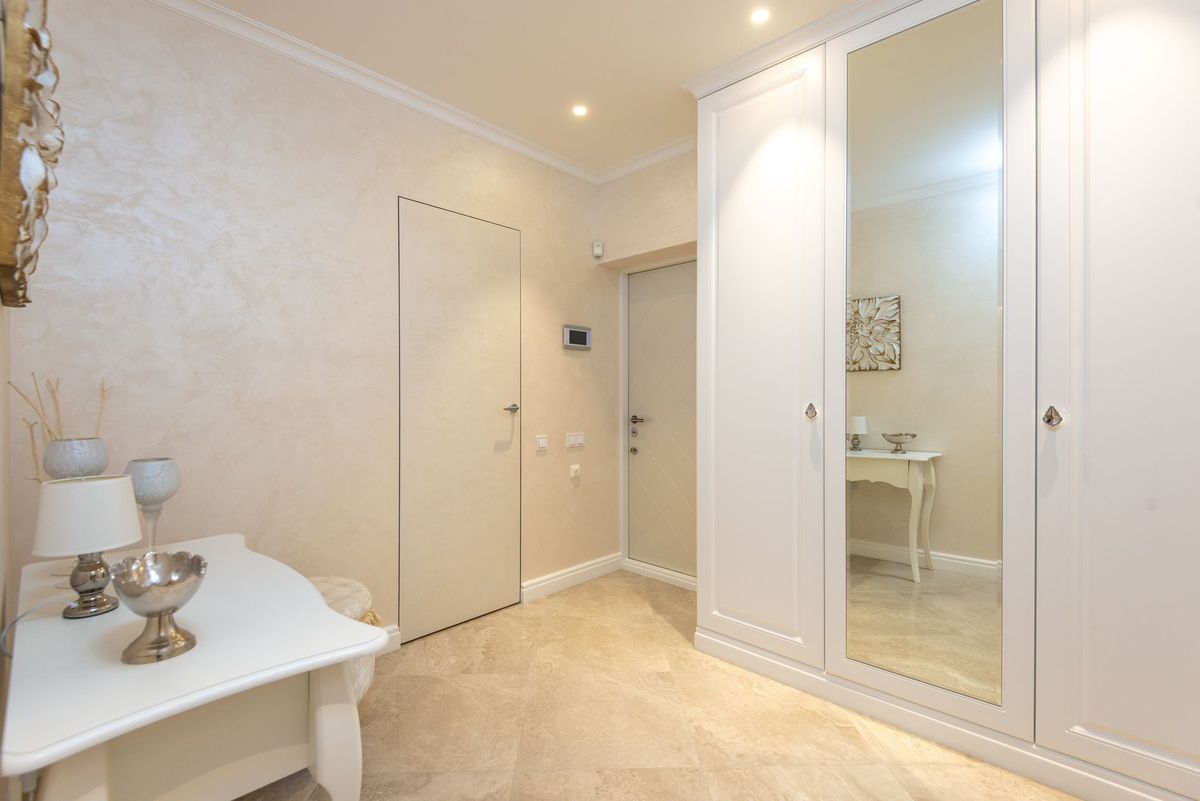
A single continuous colour removes visual stops. When skirting boards, doors and ceiling are different shades, the eye notices each transition and the space feels chopped up. Choose a soft off-white, pale grey or warm chalky neutral and use it everywhere. A washable matt or eggshell finish is practical for busy areas. If you want a little depth, use the same colour but a shade or two darker on the floor or a stair runner — just keep the walls and ceiling light.
2. Layer your lighting
One central pendant rarely flatters a narrow hallway. It creates pools of light and shadows that make the space feel smaller. Instead, aim for three layers: a ceiling light for general brightness, wall lights at eye level to wash the walls, and a small lamp on a console or shelf for warmth. Warm white bulbs (around 2700K to 3000K) feel more inviting than cool white. If you can, put the ceiling light on a dimmer so you can adjust it through the day. A slim uplighter in a corner can also bounce light off the ceiling and make the room feel taller.
Mirrors and Reflections
Mirrors are the simplest way to double light and suggest extra space.
3. Hang a large mirror opposite the front door
When you walk in, a mirror facing the door reflects the hallway back at you and creates an instant sense of depth. A full-length mirror is practical for checking your outfit, but a round or arched mirror can soften hard lines. Choose the largest size that fits comfortably without crowding the space. If the hallway is very narrow, a mirror on the longest wall works just as well.
4. Position a mirror to catch a view
Rather than reflecting a blank wall, angle a mirror so it catches something interesting: a window, a piece of art, a houseplant or an open doorway to a brighter room. This trick makes the hallway feel connected to the rest of the home and draws the eye onward. Just avoid placing a mirror where it reflects clutter — that will have the opposite effect.
Storage That Disappears
Clutter is the enemy of calm in a small hallway. The goal is to give everyday items a home without eating into floor space.
5. Choose shallow, wall-mounted furniture
A slim console table, a floating shelf or a narrow shoe cabinet keeps the floor clear and makes the hallway feel wider. Look for pieces that are no deeper than 30 centimetres if you can. Wall-mounted designs are ideal because they leave the floor visible, which tricks the eye into seeing more space. A shallow bench with storage underneath can double as a place to sit while putting on shoes.
6. Go vertical with hooks and rails
Coat hooks, a peg rail and over-door organisers use height rather than floor area. Fit a row of hooks at adult height and a lower one for children. A tall, narrow shoe rack or a stack of baskets on a shelf can hold hats, gloves and bags. Keep the top of any cabinet clear — a single small tray for keys and post is enough. If you have a cupboard under the stairs, use it for bulky items and keep the hallway itself as empty as possible.
Flooring and Sightlines
The way your eye travels through the hallway matters as much as what you put in it.
7. Run flooring lengthways
Planks, tiles or a runner laid along the length of the hallway draw the eye from one end to the other, making the space feel longer. Avoid laying flooring across the width, which can make a narrow hall feel like a series of stripes. A runner rug is a quick fix: choose one with a subtle pattern and leave a border of floor visible on each side. Busy patterns and small repeated motifs can make a space feel choppy, so keep it simple.
8. Remove obstacles and keep doors clear
Every bulky item you remove makes the hallway feel wider. If a door swings into the hallway and blocks the way, consider whether a sliding door or a door that opens the other way is possible. At the very least, make sure nothing blocks the natural walkway. Shoes, bags and umbrellas should live in a cupboard or on a rack, not on the floor. A clear path from the front door to the next room is the single most effective way to make a hallway feel open.
Finishing Touches
Once the basics are in place, small details can make the space feel intentional and generous.
9. Use a low-contrast palette
Limit your colour scheme to two or three related tones. High-contrast combinations — such as black and white — can look sharp but also highlight the edges of a small space. Instead, choose soft neutrals, muted greens, dusty blues or warm greys, and add texture through a woven basket, a linen runner or a wooden frame. Texture gives interest without visual weight.
10. Add a single focal point
Give the eye somewhere to rest. It could be a piece of art at the end of the hallway, a slim console with a lamp and a small vase, or a tall plant in a woven pot. One strong element is enough; several competing features will make the space feel busy. A mirror can double as a focal point if it reflects something beautiful.
Keeping It Feeling Open Day to Day
A styled hallway only stays welcoming if it works for daily life. A few simple habits will help:
- Keep the floor clear. Use a basket or drawer for shoes and bags, and put them away as soon as you come in.
- Limit what sits on surfaces. A tray for keys and a single decorative object is plenty.
- Open curtains or blinds on nearby windows during the day to let in natural light.
- Give everything a home. If an item does not have a place, it will become clutter.
- Review the space each season. Swap a heavy coat rack for a slimmer one in summer, or rotate artwork to keep it fresh.
With a consistent colour scheme, layered lighting, a well-placed mirror and storage that stays out of the way, a small hallway can feel bright, calm and surprisingly spacious. Start with one change — painting the walls and ceiling the same pale shade is often the most dramatic — and build from there. You will be surprised how much difference a few thoughtful choices can make to the first few steps inside your home.
Photo: Max Vakhtbovych / Pexels

You Might Also Like
Carpet, laminate, vinyl and engineered wood compared on durability, cost and maintenance — with practical advice on which flooring works best in each room of a busy family home.
A practical beginner's guide to transforming second-hand furniture: how to choose a solid piece, prep it properly, paint in thin coats, and seal it for a durable finish.