A Family-Friendly Living Room: How to Choose Durable Fabrics and Flooring
A living room shared with children and pets is not a showroom. It is a room where drinks get knocked over, where a muddy dog claims the same corner of the sofa every evening, and where somebody will eventually build a den out of the cushions. That does not mean you have to settle for something you dislike. It means choosing materials that look good on day one and still look respectable several years later. Of the many decisions involved, two do most of the heavy lifting: the fabric you sit on and the floor you walk on.
What Actually Wears Out First
Before you start comparing swatches, work out how your room fails. Most family living rooms wear out in predictable places. Arms and seat fronts take the abrasion. Pale upholstery takes the handprints, the felt-tip smudges and the pet hair. Loose weaves take the claws and the biscuit crumbs. Floors take the grit, the scooter wheels and the water bowl slops.
Knowing your weak spot tells you where to spend. If a cat uses the sofa as a scratching post, no fabric will survive indefinitely, but a tight weave will last years longer than a bouclé. If your children eat most meals sitting on the floor, the floor finish matters far more than the sofa.
Fabric: Fibre, Weave and Rub Count
Three things determine how an upholstery fabric copes with family life, and they matter roughly in that order of importance — well, actually the reverse. Weave and construction often matter more than the fibre list on the label. Still, all three are worth understanding.
Fibre
Wool is resilient, naturally dirt-resistant and holds its shape well, but it costs more and needs pH-neutral cleaners. Polyester is hard-wearing and colourfast, though cheaper versions pill. Nylon, especially solution-dyed nylon, is tough and cleans up well. Polypropylene is inexpensive and forgiving but feels less luxurious. Viscose, rayon and cotton blends feel lovely and can be a mistake in a busy room: they are weaker when damp and quick to stain.
Weave
A tight plain or twill weave resists snagging. Loose, loopy textures — bouclé, chunky chenille, open linen weaves — catch claws, crumbs and the Velcro on a child's coat. If you love a textured look, keep it for cushions and throws rather than the main sofa.
Rub count
Upholstery is graded by Martindale rub count, which estimates abrasion resistance. As a rough guide:
- Around 20,000 rubs — fine for a spare room or a lightly used armchair.
- 25,000 to 30,000 rubs — a sensible minimum for a family sofa.
- 40,000 rubs and above — contract-grade upholstery, worth considering if the sofa doubles as a trampoline.
Leather, Faux Leather and Treated Fabrics
Leather divides opinion, and the type you buy matters more than the material itself. Pigmented or protected leather has a finish that wipes clean and shrugs off spills, though scratches can show as lighter marks. Aniline leather is softer and develops a patina, but it absorbs liquid, marks easily and is not the obvious choice with toddlers or claws.
Faux leather made from polyurethane is cheaper and easy to wipe, but cheaper versions can crack or peel at the seams, particularly where elbows and knees press. Bonded leather, which is mostly a composite, is generally the least durable option.
Treated "performance" fabrics are genuinely useful: spills bead up and can be blotted rather than scrubbed in. Be realistic about the limits, though. These finishes wear away with repeated cleaning and abrasion, so they buy you time rather than immunity. A removable, machine-washable cover is often the better investment.
Flooring: Match the Surface to the Room
Hard flooring is easier to clean; carpet is warmer, quieter and kinder to knees. Both can work in a family living room. The trick is choosing the right specification rather than the right category.
Wood and wood-look
Engineered wood with a decent top layer can be sanded back once or twice. Solid wood scratches but can be refinished repeatedly. Laminate is rated in abrasion classes — AC3 is suitable for general domestic use, AC4 for heavier domestic traffic, AC5 for commercial spaces. Luxury vinyl tile (LVT) is waterproof and comfortable underfoot; look for a wear layer of at least 0.3mm for a living room, and 0.5mm or more for hallways and kitchens, where grit does the damage.
Carpet
For homes with pets, a tight twist pile beats a loop pile, which snags on claws and pulls into runs. A thick saxony feels luxurious but flattens under furniture and shows footprints. Wool blends feel good and resist soiling; solution-dyed nylon and polypropylene are the practical choices if you want something you can treat with a dilute bleach solution after an accident. Good underlay extends the life of any carpet and noticeably reduces noise.
Tile and stone
Porcelain is close to indestructible and handles muddy paws and paint spills with a mop. It is also cold, hard on falling knees and unforgiving if you drop a glass. Grout lines trap dirt, so mid-tone grout is more forgiving than white. Choose a textured finish rather than a high polish anywhere that might get wet.
- Busy play zone: LVT or laminate with a rug on top.
- Draughty period room: wool-mix twist carpet with quality underlay.
- Dog that sheds and dribbles: hard floor plus a machine-washable rug.
- Anyone with asthma or allergies in the house: hard flooring is usually easier to keep dust-free, but if symptoms are significant, it is worth discussing the carpet-versus-hard-floor question with a GP or allergy specialist rather than relying on general advice.
Colour, Pattern and Hiding the Mess
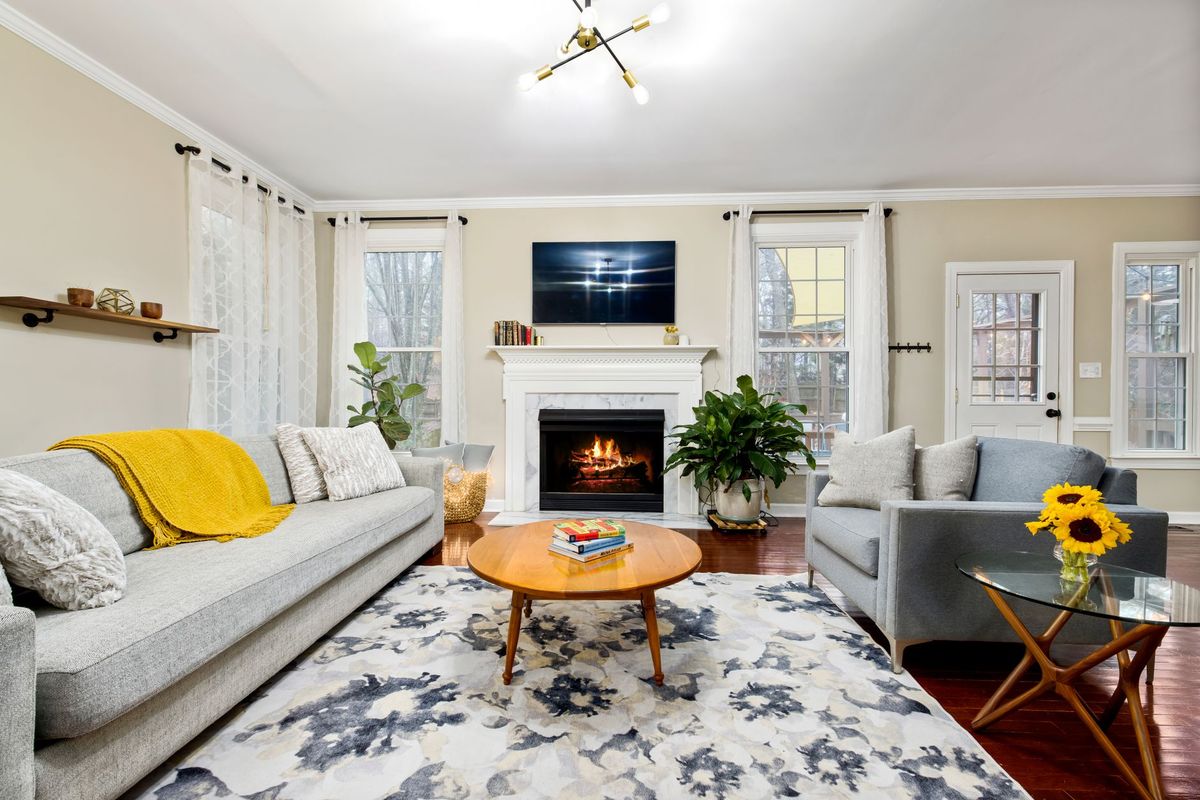
Mid-tones win almost every time. Very dark floors and sofas show every speck of dust and every strand of pale pet hair; very light ones show muddy footprints and spills. A broken, multi-coloured pattern — a subtle check, a small-scale print, a speckled vinyl — disguises far more than a flat solid ever will, because your eye has nothing continuous to compare against.
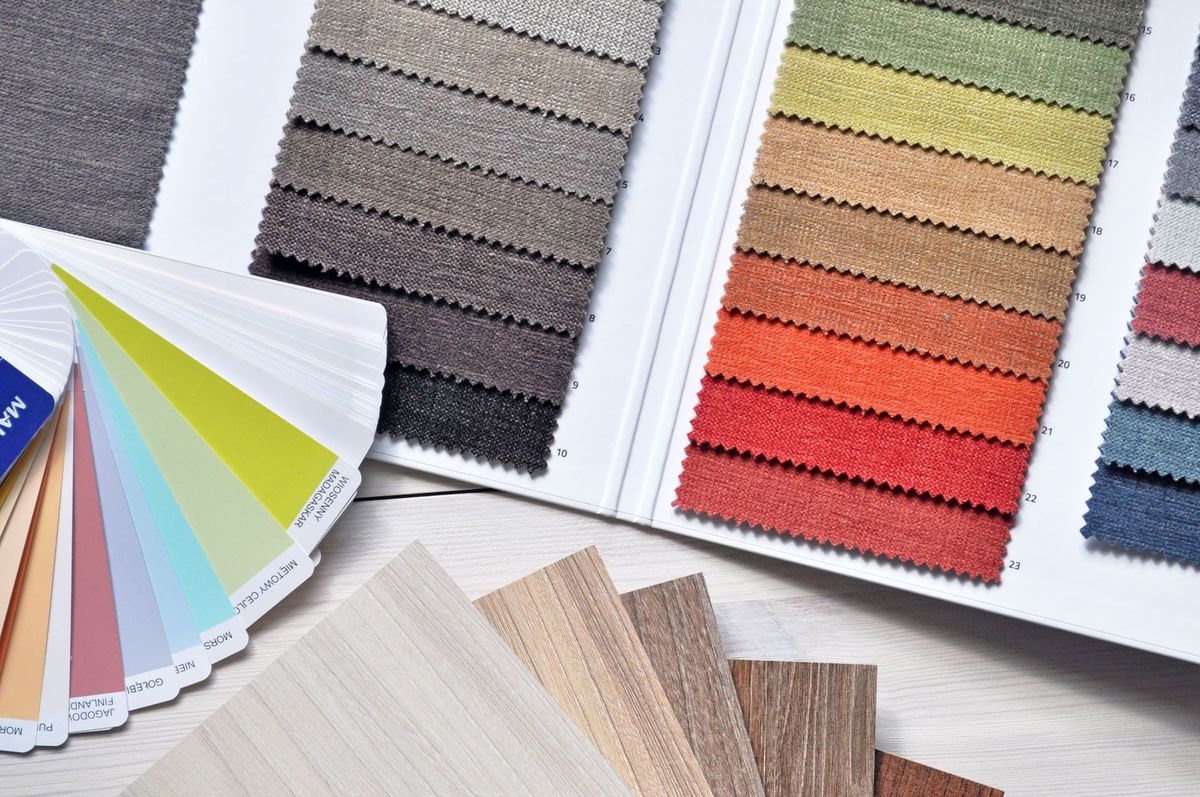
Two small habits make a difference. Turn samples to the window and look at them in daylight, then again under a lamp in the evening, because colours shift dramatically. And check how a fabric or floor looks with your actual pet hair, if you can. It is not glamorous, but it is a useful test.
Finally, protect the floor you have chosen. Felt pads under furniture legs, a mat inside the door, and a rubber-backed rug on hard floors (over a pad, since rubber can mark some wood and vinyl finishes over time) will spare you more damage than any upgrade.
Try Before You Buy: A Practical Checklist
Samples are free or inexpensive, and they will save you from an expensive mistake. Take them home and live with them for a week before ordering.
- Order a sample of every fabric and floor you are seriously considering, not just your favourite.
- Test liquid on the fabric: water, black coffee and a drop of cooking oil. Blot, do not rub, and see what remains.
- Scratch the fabric lightly with a key and press a fingernail into the floor sample. Both mimic daily life better than a showroom ever will.
- Drop the sample on the floor in the actual room and walk past it for a few days. Light changes everything.
- Measure your traffic routes before ordering. The path from the door to the sofa will wear first, so spend your budget there.
- Ask about removable covers, replacement carpet tiles and spare planks. Repairability is worth more than a marginally tougher material.
Buy the toughest specification you can afford in the places that take the punishment, and let everything else be a little softer. A family living room should feel comfortable to sit in, not like a room you are protecting from the people who use it.
Photo: Monstera Production / Pexels
You Might Also Like
Carpet, laminate, vinyl and engineered wood compared on durability, cost and maintenance — with practical advice on which flooring works best in each room of a busy family home.
A practical beginner's guide to transforming second-hand furniture: how to choose a solid piece, prep it properly, paint in thin coats, and seal it for a durable finish.